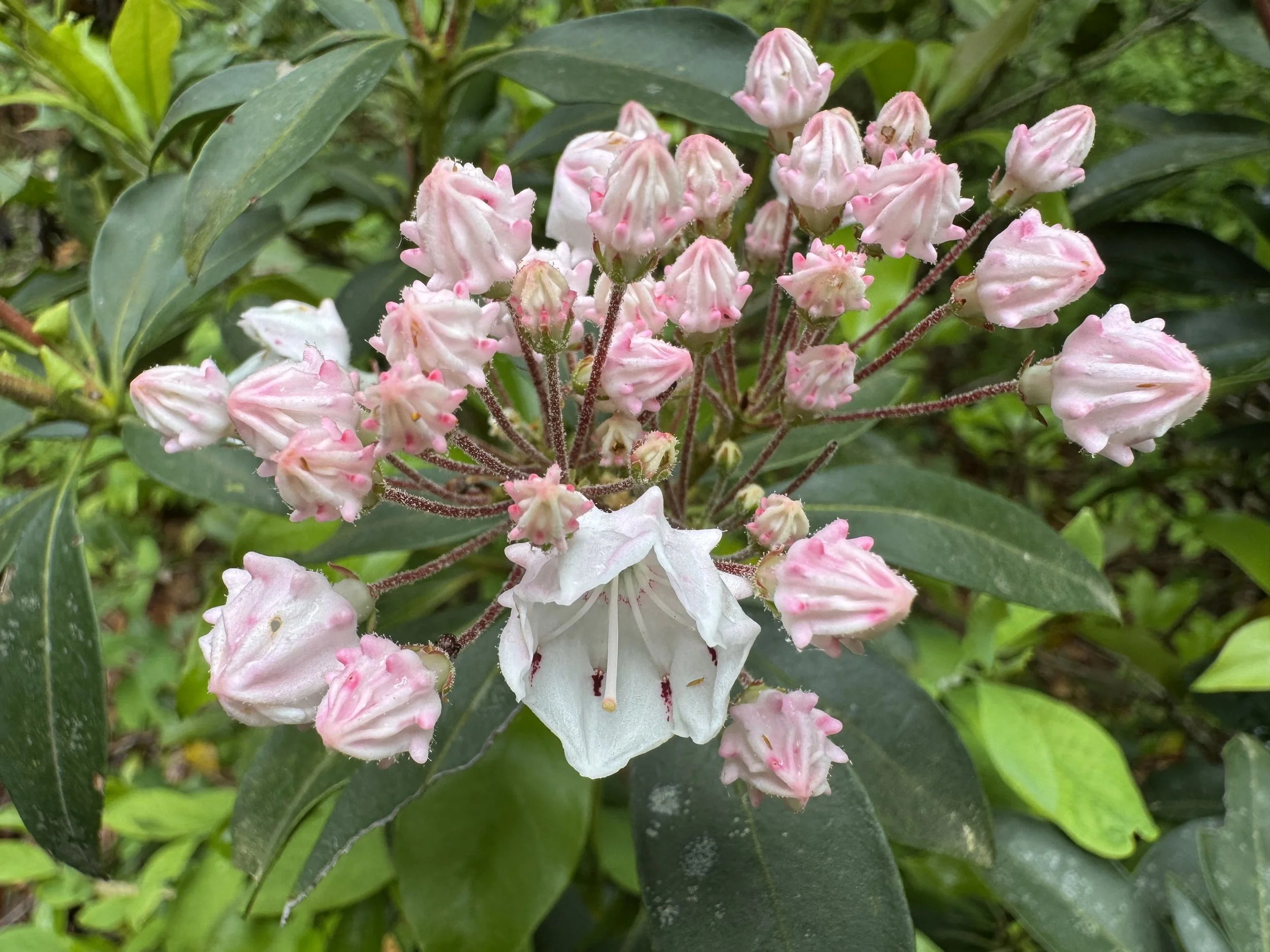
We Intuitively Know
There is a unity of life that we intuitively know in our soul. When we become aware of it we respond in ways noble and beautiful.
There is a unity of life
that we intuitively know in our soul.
When we become aware of it
we respond in ways noble and beautiful.
Though life is experienced individually,
the source and perfection of it
is shared by all beings.
To love and serve wisely is to share
the greatest blessing of our soul.
The meditative life is not
closed off from worldly encounters.
It is pursued through every aspect of life
with will, wisdom and love.
Living thus, we dedicate our life to the
realization of the oneness of God—
one with our soul, and the soul of all beings;
one with the source that pervades
and sustains the whole universe.
Srimati Karuna
Lights on the Path
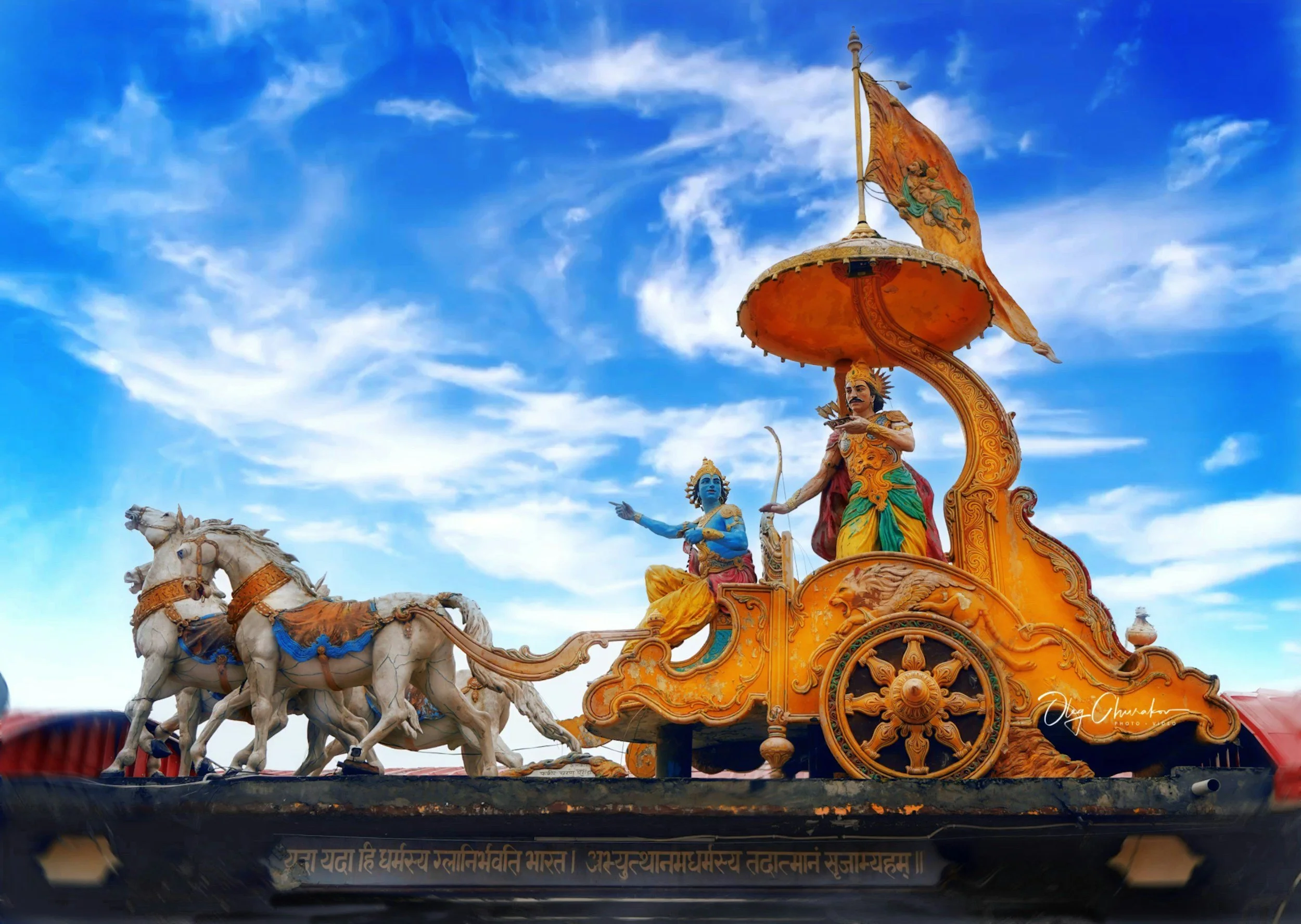
The Chariot, Charioteer & Horses
Know that the Self is the rider, and the body the chariot; that the intellect is the charioteer, and the mind the reins. The senses say the wise, are the horses; the roads they travel are the mazes of desire. The wise call the Self the enjoyer when he is united with the body, the senses and the mind.
The Self is not known through study of the scriptures, nor through subtlety of the intellect, nor through much learning; but by him who longs for him is he known. Verily unto him does the Self reveal his true being. By learning, a man cannot know him, if he desist not from evil, if he control not his senses, if he quiet not his mind, and practice not meditation.
Know that the Self is the rider, and the body the chariot; that the intellect is the charioteer, and the mind the reins.
The senses say the wise, are the horses; the roads they travel are the mazes of desire. The wise call the Self the enjoyer when he is united with the body, the senses and the mind.
When a man lacks discrimination and his mind is uncontrolled, his senses are unmanageable, like the restive horses of a charioteer. But when a man has discrimination and his mind is controlled, his senses, like the well-broken horses of a charioteer, lightly obey the rein.
Katha Upanishad
Translated by Swami Premananda
Eight Upanishads

Prana - Breath of Life
The one consciousness-bearing life force is “Prana.” Prana is the “breath of life,” because there is no life without it; yet prana is not breathing per se. It is what animates all existence and all manifestations of life. All the cosmic space (the Akash) as well as vital forces such as gravity, magnetism and electricity evolve out of Prana. From movements higher and finer than nerve currents, to thoughts and actions, to the lowest and grossest — all are manifestations of Prana.
The one consciousness-bearing life force is “Prana.” Prana is the “breath of life,” because there is no life without it; yet prana is not breathing per se. It is what animates all existence and all manifestations of life. All the cosmic space (the Akash) as well as vital forces such as gravity, magnetism and electricity evolve out of Prana. From movements higher and finer than nerve currents, to thoughts and actions, to the lowest and grossest — all are manifestations of Prana.
The Prashna Upanishad identifies Prana as the Supreme Power of Life born of the Atman, the Universal Self. Prana sustains and rules all functions of the various currents of life-force within the body:
Like the spokes on the hub of a chariot wheel, all beings are established on Prana. Revelation, meditation, hymns, sacraments, power and wisdom — all these are possible because of Prana
The universe of cosmic energy, or prana, exists in two tendencies: one is unmanifest, the other manifest. The unmanifest exists as the vast potential of formless being out of which the universe arises. It is self-absorbed—that is, with the power to be, but without change. The second tendency of prana is dynamic and creative: that which manifests and which we see as matter, as living organisms, and all that we behold with our minds.
Prana is the divine link between the so-called spirit life and so-called body of man. This prana is carried and organized through the intricate centers of consciousness within the body and perceived in the brain in ways that control the physical body and the mind. But something more: This prana, as it is brought through the mind in the brain, determines the quality of our consciousness. When the universal or divine consciousness is manifested or perceived at each center within our spine the result is a particular awareness, an awareness of life around us, an awareness of others.
The limitless potential energy force of prana is called kundalini. It is neither electric nor is it mechanical. It is not the energy that is normally used by us throughout the day to maintain our expressive and creative life, but it is that reservoir of energy which exists to be drawn through the mind into the human nervous system. That potential kundalini energy of prana within us is not surplus, not dormant, but is as yet unknown. We call it spiritual because it determines the quality of our character, our state of consciousness and our ultimate peace and happiness.
Swami Kamalananda
The Breath of God and Pranayam

Daily Resurrection
When awakened from that entombment, soul is resurrected from the grave of ignorance into the light of inherent wisdom.
“Our daily living may enslave our consciousness in the outer world and enchain our cognitive perception. Mind tends to become overfilled with finite thoughts and to be buried under the debris of finite concepts. When awakened from that entombment, soul is resurrected from the grave of ignorance into the light of inherent wisdom. That is the true meaning of Easter as the mystics have realized and revealed.”
— Swami Premananda, Seven Mystic Holydays

The Devotee
Love is eternally within us. We feel its presence; we know it exists in us; we realize its power; yet we are unable to express it in words. Who has ever succeeded in giving the fullest expression of love in words? None. Love is transmitted from heart to heart, from soul to soul. Love is manifested only through heart and soul. In love we become silent. In the fullness of love, we are speechless. In love, our whole being vibrates in the rhythm of joy. Love needs no words to express itself.
Love is eternally within us. We feel its presence; we know it exists in us; we realize its power; yet we are unable to express it in words. Who has ever succeeded in giving the fullest expression of love in words? None. Love is transmitted from heart to heart, from soul to soul. Love is manifested only through heart and soul. In love we become silent. In the fullness of love, we are speechless. In love, our whole being vibrates in the rhythm of joy. Love needs no words to express itself. The moment we attempt to express love in words, it loses its charm, its magnetism is gone. Truly did the poet realize: “When words are spoken, Love’s accent is soon forgot.” Do not inquire about love, find it, live in it, and be immersed in the sweetness of joy. Love cannot be understood by intellect. Love dies when we try to analyze it. Love is a quality of soul, it is realized in soul alone.
To a devotee, every individual is a medium through which he beholds God. His father, mother, friends, and all are such media. He receives his friend, not with the thought that he is a human being, but with the realization that God has come to him as a friend. His attitude is the same towards all who come into his life. Whatever he perceives, he sees God in it. To him, a flower is not a flower, but the expression of divine beauty. The little veins on the leaves are not ordinary marks; they are the blessed names of the Lord written thereon. He listens to the song of the bird. To him it is not the bird that sings, but the Lord who sings to him songs of love and joy. Thus, the whole life of the devotee and the universe around him are spiritualized in the twinkling of an eye. That state which the Raja Yogi realizes only by years of rigid practice, the Jnana Yogi after lives of discrimination, and the Karma Yogi after many reincarnations of service, the Bhakta attains in an instant.
The Magnetic Power of Love (Bhakti Yoga)
Swami Premananda

Spiritual Crossroads
We are always at the crossroads of our spiritual destiny. Will we proceed along the same habitual route or take a new direction?
We are always at the crossroads of our spiritual destiny. Will we proceed along the same habitual route or take a new direction? Will we repeat the same old problems or take a higher-minded course to solve them? The old path offers only perpetuation of the old. The new one will surely bring new challenges, but also the promise of greater happiness and wisdom.
Swami Kamalananda
Reflections on Still Waters

Authority of the Soul
Our senses are sacred and spiritual. The body is the instrument of the soul. “The body is the living temple of God.” There is nothing profane or impure about the body. The only limitation in terms of the body is the identification of consciousness in terms of our happiness or peace on earth with the body. We also live by spirit and should conduct our life by spirit.
Our senses are sacred and spiritual. The body is the instrument of the soul. “The body is the living temple of God.” There is nothing profane or impure about the body. The only limitation in terms of the body is the identification of consciousness in terms of our happiness or peace on earth with the body. As Jesus said, “Man shall not live by bread alone.” By this statement he acknowledged that human life requires attention and care in its material provision and well-being (“bread”), but he also express that something else is required for our living. We also live by spirit and should conduct our life by spirit.
Why should we not totally accept the authority of our senses? See what reality the “light of the world” brings you: Scientists have been aware of the alarming limitations of man’s senses. Anyone who has ever thrust a a glass prism into a sunbeam to see the shadow colors of the solar spectrum refracted on a wall has looked upon the entire range of visible light. For the human eye is sensitive only to the narrow band of radiation that falls between red and violet. A few one hundred thousandths of a centimeter in wave length makes the difference between visibility and invisibility. Our sense faculty of “vision” fails to respond to most “lights” of the world. Yet we know that the sun emits many more lights that are used by our minds and upon which we rely in our daily experience: infrared rays, ultraviolet, x-rays, radium, radio, cosmic and gamma rays—all detected in various ways. The world would appear far different if our eyes were sensitive, for example, to x-rays!
A curious order of the universe runs through our perceptions. Existence is known to us other than merely through our objective perceptions, and understanding the limitations of the senses can augment the user of our higher faculties. The mind colors even the perceptions brought to it by the senses, and the quality of “things” depends on the universe of order that is within man subjectively. We act as if “green,” and “tickling,” and “bitter,” and “sweet” were existing the atoms, but they are not as properties of the external objects. Such qualities exist in opinion and not in reality. They have been ascribed by the mind. Upon analysis we readily see—as did Democritus and Galileo as scientists—that the mind is the authority behind the senses. There simply is no “objective world” for us. The meaning of the world as brought to us by fact of objectivity is hardly knowable, since it is always interpreted within us by the mind.
The authority of the senses alone is a contradiction. We act as if we believe in it, seeking pleasures which we know are evanescent; yet it dashes us at every turn.
The sage, the unenlightened, the beggar, the king—all know that life on earth is temporary; everything on earth dies. All progress, reform, luxuries, vanities, wealth and discovery will certainly end in time. Somehow we refuse to believe this, clinging to the ephemeral, weeping at its going, craving its coming. When all proceeds pleasantly according to our comforts we are optimists; when the current of the eventual goes agains us we become pessimists.
What is most precious to us? Our house may burn down; our business may fail; we may lose money or even the association of dear ones—but if we lose the authority over our spiritual remembrance we have lost everything. Losing sight of God, the equilibrium of our life is doomed. Without our spiritual idealism as the foundation of our life, eventually the objective structures of life will collapse and crush us. The authority of the soul must pervade even the awareness and perception of our senses.
—Swami Kamalananda
Frontiers of the Spirit

The Yuletide Tree
Perhaps you were walking in woodland familiar to you. A place that brings you thoughts of the beauty, majesty and beneficence of a forest. Did the little tree invite you with a special charm? “Perfect,” You thought. “I receive this offering as Perfect. It has fulfilled its forest existence with quiet humility and grace.”
“Perhaps you were walking in woodland familiar to you. A place that brings you thoughts of the beauty, majesty and beneficence of a forest. Did the little tree invite you with a special charm? “Perfect,” You thought. “I receive this offering as Perfect. It has fulfilled its forest existence with quiet humility and grace.”
Perhaps the little tree was planted and cultivated by a farmer to end up in a home like yours, or perhaps it sprang up in the forest from the seeds of previous generations, surrounded with other voluntary upstarts, all drawing to light and sharing the vitality and breath of creation.
You chose it for its symmetry or something intangible about it that suited the space you would soon offer it, and you no doubt discovered that it had some peculiarities: Some branches splayed out; one side was a bit uneven; there were gaps that needed to be filled. It had to grow in a unique way to be vigorous and to receive light.
Once “home,” within the evenness of walls and windows, its form became more pronounced. Did you attempt to remove or alter its expression then, so it conformed to public appraisal? Remember, whatever its own expression while in the forest, it spoke intimately to your heart. So you allowed that vision to survive as you chose it.
You worked to share its vital verdure anew, stringing it with strands of brightly colored lights, garlands and metallic bulbs, hand-painted decorations, carved and mirrored collections specially sorted and saved from over the years.
Sitting there in front of your yuletide tree in silent admiration you were filled with its timeless message of Gladness and Hope.
O, if we could meet other humans beings with as much love and respect as we do our beloved Yuletide Tree!
If we could recognize how they too came to live and grow on earth, striving for growth, for light and companionship of their surroundings as we do.
Like this little tree, humans are born into conditions they cannot change and must adapt in order to survive and flourish.
Like this little tree’s branches some people have traits and virtues that seem disproportionate or overbearing.
It is for us to encourage them, to visualize their rightfulness and fruition, giving them adornments from our own treasures of divine qualities.
You brought this little tree from God's garden onto the hearth of your heart. It shared its truth and beauty with you as an offering, and you received it with love and joy.”
Swami Kamalananda
The Forest of Forever

Gracious Light of Soul
The Angels, Gracious Light of Soul, bending near the earth in me touched the golden harp strings of my heart.
“The Angels, Gracious Light of Soul,
bending near the earth
in me
touched the golden harp strings
of my heart
and the worlds
in silent obeisance lay
to hear their voices:
"Peace and Joy!
Peace and Joy
unto All!"
Upon this midnight clear
I listen to their
Word
resounding,
still.”
Swami Kamalananda

Gratitude
Acknowledgement with soul of the beneficence of love is gratitude. Love is creatively good. It is divinely active. Love is the self-manifesting attribute of God.
Acknowledgement with soul of the beneficence of love is gratitude. Love is creatively good. It is divinely active. Love is the self-manifesting attribute of God. The greater the realization of God, the more abundant is the manifestation of the qualities of love. Love offers the fulfillment of our desire, hope, aspiration and ideal. Only when the gifts of love are received with soul does the virtue of gratitude adorn the heart.
Swami Premananda
One Hundred and One Noble Qualities

Life of Unfoldment
As the soul unfolds its nature, we no longer view life at a distance. We know one existence, eternal, infinite and free. In absolute Oneness, there is neither near nor far. There is no separation. Being and becoming have no distinction.
As the soul unfolds its nature,
we no longer view life at a distance.
We know one existence,
eternal, infinite and free.
In absolute Oneness,
there is neither near nor far.
There is no separation.
Being and becoming
have no distinction.
All are parts of one Reality,
indwelling and all-pervasive.
Learn to unfold
the divine blessings of soul
at each stage of life.
Know the spiritual value of every experience.
Practice living the life of yoga
with sincere determination.
This discipline becomes
a source of boundless joy.

Ahimsa: Highest Dharma
In the Gita, Krishna revealed that denial of the Self is himsa or injury. Buddha, the enlightened one, taught that ahimsa is the highest dharma (principle) of life. Patanjali was a mystic and philosopher of ancient India. He offered thoughtful insights and enlightened commentary on yoga and suggested the practice of yama or the discipline of abstention from injurious thought, word or deed.
Patience, humility, tolerance, understanding, respect: these are the qualities of ahimsa. There are tactics, strategies and movements that people have collectively utilized to encourage a nonviolent basis for society. However, the foundation of ahimsa begins with a charitable thought, a kind word or an act of service toward another human being. When our very nature revolves around such an existence, there is no doubt in our mind as to how to approach a difficult situation or how to resolve a conflict, because we have already fortified our heart and mind to be flexible, creative and fearless. We have the strength to endure. We are not controlled by anger. Rather, we constructively direct our energy and find enough strength of character to realize a higher calling than the ugliness and brutishness that could otherwise pull us down. Any action which is adversarial or coercive in motive is contrary to the philosophy of ahimsa. The desire to do good, to be charitable and to contribute to the well-being of all comes only through pure love. Such love is not just a preference for some familiar persons or conditions to others. It is the awareness that all life is one and interrelated, progressing from one source to one goal.
The practice of ahimsa is as broad as life itself. It consists of our daily efforts to convert the negative demands of our selfish ego into the positive expressions of the soul. This requires constant attention, subtle thinking and above all, great love. Pure and sincere efforts are the greatest powers and attainments of ahimsa.
What Gandhiji comprehended, advocated and lived, is a complete yoga of love. Love is the hub of the wheel. The idea of returning love and forgiveness for hatred and injury was not, of course, invented by Gandhiji. It is as “old as the hills.” In the Gita, Krishna revealed that denial of the Self is himsa or injury. Buddha, the enlightened one, taught that ahimsa is the highest dharma (principle) of life. Patanjali was a mystic and philosopher of ancient India. He offered thoughtful insights and enlightened commentary on yoga and suggested the practice of yama or the discipline of abstention from injurious thought, word or deed. Gandhiji himself referred often to the teachings of Christ to “Love thy neighbor as thyself…resist not evil…and bless them that curse you, do good to them that hate you, and pray for them that despitefully use you and persecute you.” Such unconditional love is true bhakti, complete dedication to the spiritual ideal of absolute oneness.
Srimati Karuna
Gandhi’s Steadfast Yoga

AUM
When the mind is absorbed by the cosmic vibration, AUM, then the power of understanding becomes pure, the mind remains established on the Self at the spiritual eye, and finally the Self is revealed.
The Self is formless and transcendental. Let not thy meditation be merely blind practice without the understanding of its principles and ideal. Such practice often misleads the aspirant and wrecks his spiritual life. Thy understanding will become perfect with the realization of the Self. Those who seek phenomenal powers through meditation create bondage and misery for themselves. (49) By following the path of meditation with true understanding and perfect vision, thou shalt realize thyself as the absolute Self. Therefore practice thy meditation with joy and determination. This is the secret of self-realization. (50) The true Yogi does not desire any phenomenal power. Thus he transcends the limitations of duality and realizes the state of absolute bliss. (51) In the process of meditation, when the consciousness of sense-identification is removed, the limitations of time, space and causality vanish in the realization of conscious, blissful, eternal existence. (52) When the mind is absorbed by the cosmic vibration, AUM, then the power of understanding becomes pure, the mind remains established on the Self at the spiritual eye, and finally the Self is revealed. (53)
The self:
What is the nature of absolute self-realization? Transcending all limitations, how does a man of self-realization manifest himself in speech, action, and life? (54)
The supreme Self:
Eternal existence in absolute bliss is the glory of self-realization. It is the state of pure-consciousness, wherein the self is liberated in the cosmic Self. In this state of pure-consciousness all thoughts of self-limitation are forever gone. (55) When a man of self-realization manifests himself on earth, to him suffering and happiness are various waves of absolute bliss. He lives in peace. His all-embracing love is pure and spiritual. The realization of his oneness with all is ever present in his consciousness. He is ever aware that his own infinite perfection is reflected in and through all beings. He realizes that the whole manifested universe is a part of his own cosmic Self. (56) The same to all is the man of perfect wisdom. Virtue and vice are to him different degrees of the same goodness. In him both saint and sinner find guidance, assurance, comfort and inspiration. Peace and calmness are not conditioned by circumstances for a man of self-realization. (57) Absolute control over the mind is the prerequisite of self-realization. When the mind is withdrawn from the senses and sense-objects, when all its modifications have ceased, then the Self is revealed and wisdom is attained. (58) Consciousness of forms exists in the qualified Samadhi, the Savikalpa. All forms vanish in the absolute Samadhi, the Nirvikalpa. (59) When the mind fails to reflect the perfection of the Self, it becomes a slave to the senses. (60) Therefore the spiritual aspirant continuously identifies his mind with the Self, and thus finally attains self-realization. When the mind is no longer dominated by the finite, it invariably leads to the state of infinite consciousness which is the state of absolute self-realization. (61) In the finite plane of consciousness mind is the reflector of the Self as well as the recipient of impressions of phenomena. But when it is allowed to be occupied exclusively with the latter it becomes allured by these and longs for phenomenal powers, and challenges any obstacle to their fullest enjoyment. (62) Gradually the veil of finitude and delusion hides the reflection of the Self from the mind. Finally, it becomes almost oblivious to its identity with the Self and is lost in the snare of phenomena. (63) But when the mind is identified with and guided by the Self, the aspirant is neither distracted nor discouraged by the allurements of phenomenal powers. He continues in his meditation in perfect self-assurance and serenity. (64) In perfect calmness of mind, all consciousness of duality vanishes and the Self is realized. This is the state of absolute bliss. (65) Without the complete identification of the mind with the Self, the Self is never realized. Without self-realization there is no peace. And without peace, how can there be the attainment of bliss? (66)
Swami Premananda
The Srimad-Bhagavad-Gita: The Revelation of the Supreme Self
Spiritual interpretation of the Gita according to Kriya Yoga

Ajna - The Spiritual Eye
The illuminating, joyous vibration of the ascending current of Pranic force resembles the tone quality of the hum of the bumblebee at Muladhar, coccygeal; that of the melodious note from a violin at Sadhisthan, sacral; that of the sweet call of a flute at Manipur, lumbar; that of the deep and vibrant roar of a conch at Anahata, dorsal; that of the reverberation of rolling thunder at Visuddha, cervical; and that of an universal symphony of exalting blissfulness at Ajna, the spiritual eye.
Illumined and inspired by the divine qualities of the indwelling supreme Self, the enlightened self becomes firmly established at Ajna, the spiritual eye, and witnesses a white star within a dark blue center surrounded by a brilliant but soothing effulgence. While at this state there is awakened a cosmic vibration of all-engulfing immensity wherein the self is merged in blissful self-consciousness. The illuminating, joyous vibration of the ascending current of Pranic force resembles the tone quality of the hum of the bumblebee at Muladhar, coccygeal; that of the melodious note from a violin at Sadhisthan, sacral; that of the sweet call of a flute at Manipur, lumbar; that of the deep and vibrant roar of a conch at Anahata, dorsal; that of the reverberation of rolling thunder at Visuddha, cervical; and that of an universal symphony of exalting blissfulness at Ajna, the spiritual eye. Besides these there are also felt in this body temple the power of calmness of mind and poise of the senses, clear conscience and love of truth, intuition and enlightened perception, as well as the power of purified consciousness and self-realization. The illuminating power and joyousness of these vibrations are beyond the conception of mind. This cosmic vibration, resounding throughout the entire being and consciousness, spiritualizes the faculties of the senses, transforms the will of the sense-attached mind, and liberates the self from sense-identification.
Srimad-Bhagavad-Gita: The Revelation of the Supreme Self
Swami Premananda

Meditation at Dawn and Dusk
The practice of meditating upon first awakening in the morning and as the last thing we do before retiring at the end of the day is quite natural and logical. We feel drawn to Nature’s heart, a consciousness that unites our body, mind and spirit in inspiration.
The practice of meditating upon first awakening in the morning and as the last thing we do before retiring at the end of the day is quite natural and logical. We feel drawn to Nature’s heart, a consciousness that unites our body, mind and spirit in inspiration. With each dawn, the sun floods all earthly life as it spreads its gaze over the horizon and reawakens all with its smile of pristine purity. With daily morning meditation, we feel that our day has been blessed from its beginning with God’s own Light-Life-Love to sustain and guide us.
Our evening meditation affirms our spirit’s independence from worldliness as a perfect completion to our day: As the sun withdraws over the horizon, we also withdraw our minds from all attentions, trappings and efforts as “sufficient unto the day” and finished, following the sun’s example by letting go of all mundane responsibilities such as job, family and other social concerns.
Swami Kamalananda
The Breath of God and Pranayam

Breath
Before there was existence or nonexistence, Before there was sky or atmosphere above, Before there was birth, death or immortality, Day or night, light or darkness. . . Only the One Existent breathed calmly. . . self-contained, with nothing beyond.
There are many similarities in Vedic and Biblical stories of creation.
God is Creator in the Book of Genesis and the Supreme Being (“Brahma”) in the Vedas. In both traditions the Creator transcends the entire universe while bringing forth all life and beings, animate and inanimate. Every religious tradition we know describes the human being as the pinnacle of the process of creation, the most advanced of all living beings on earth.
In the Biblical story, God first created heaven and earth, the seas and the air, the fishes, fowls, herbs and plants and all living creatures in six days, and seeing that it was good ended all this work on the (symbolic) seventh day with rest. And then,
...the Lord God formed man (Adam) of the dust of the ground, and breathed into his nostrils the breath of life; and man became a living soul. Genesis 2:7
The name “Adam” derives from a combination of “adi,” meaning first, and “aham,” or “ahong,” meaning “I-consciousness.” Adam thus became the first manifested self-consciousness as he drew in God’s imparted breath-of-life. This is similarly stated in the Qur’an:
I breathed into humanity something of my own spirit. Qur’an 38:72
Yet reading “God breathed” only begs the greater persisting philosophical question: How? Exactly what is God’s breath? The profound answer to that question is what strikingly distinguishes the Vedic and Upanishadic thought in several ways, the foremost being that breath existed BEFORE creation itself, i.e., without extraneous breath, as the One Existent, without a second:
In the beginning,
Before there was existence or nonexistence,
Before there was sky or atmosphere above,
Before there was birth, death or immortality,
Day or night, light or darkness. . .
Only the One Existent breathed calmly. . .
self-contained, with nothing beyond. Rig Veda
From that Absolute Being comes the cosmic manifestation of Breath.
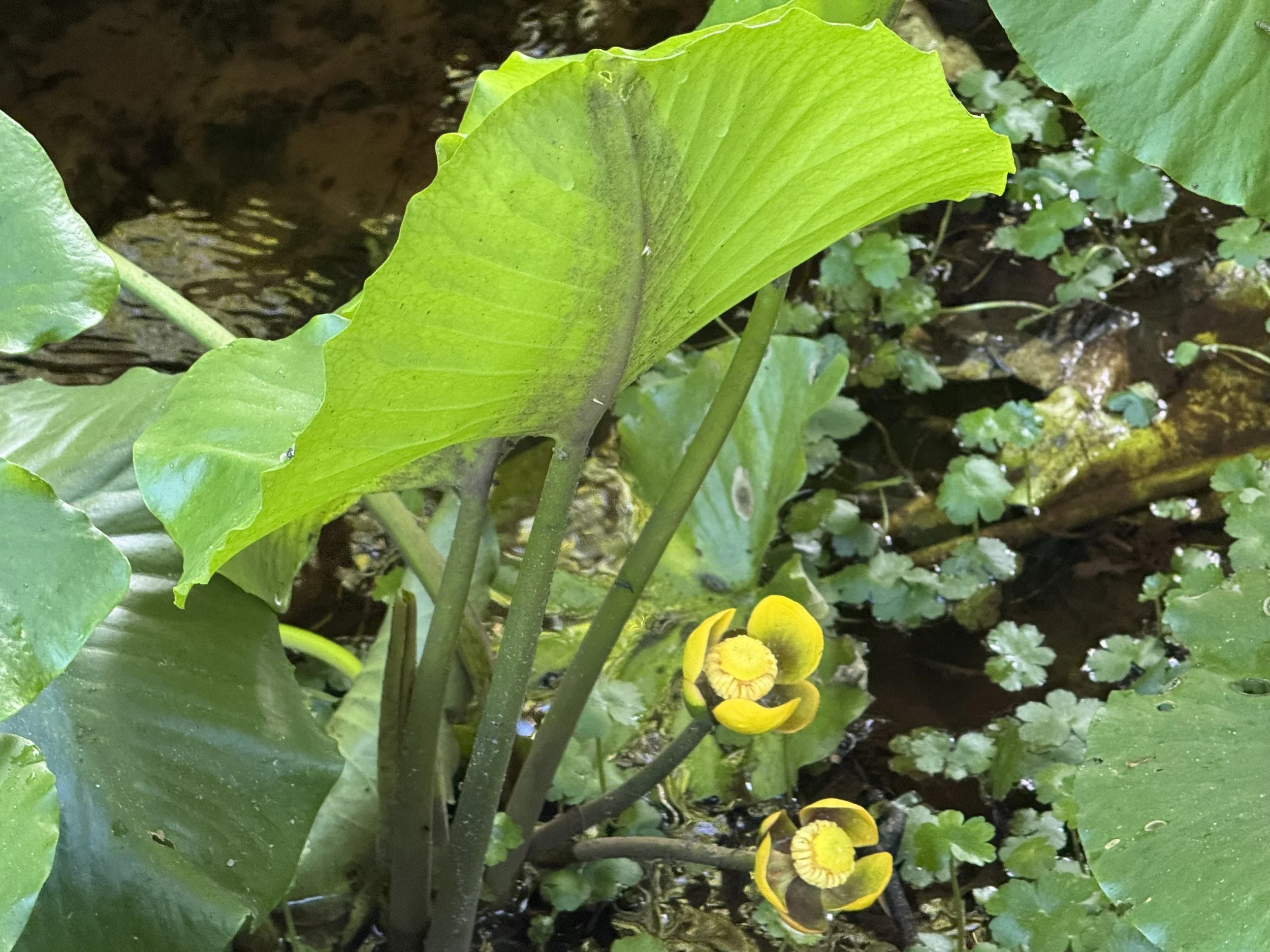
Prana
The one consciousness-bearing life force is “Prana.” Prana is the “breath of life,” because there is no life without it; yet prana is not breathing per se. It is what animates all existence and all manifestations of life. All the cosmic space (the Akash) as well as vital forces such as gravity, magnetism and electricity evolve out of Prana. From movements higher and finer than nerve currents, to thoughts and actions, to the lowest and grossest — all are manifestations of Prana.
The one consciousness-bearing life force is “Prana.” Prana is the “breath of life,” because there is no life without it; yet prana is not breathing per se. It is what animates all existence and all manifestations of life. All the cosmic space (the Akash) as well as vital forces such as gravity, magnetism and electricity evolve out of Prana. From movements higher and finer than nerve currents, to thoughts and actions, to the lowest and grossest — all are manifestations of Prana.
The Prashna Upanishad identifies Prana as the Supreme Power of Life born of the Atman, the Universal Self. Prana sustains and rules all functions of the various currents of life-force within the body:
Like the spokes on the hub of a chariot wheel, all beings are established on Prana. Revelation, meditation, hymns, sacraments, power and wisdom — all these are possible because of Prana.
Although we summarily call it Prana, we also describe Prana as expressing in five vayus, “winds” or currents working throughout the entire vast body of Nature. The five motions of Prana are associated with the five elements manifesting everywhere.
Swami Kamalananda
The Breath of God and Pranayam

Mental Habits for Meditation
Do you know what happens to the mind that is unprepared, untrained, ignorant of its divine powers of pure self-reflection? It becomes afraid. Afraid to be alone. Afraid to be silent. Afraid to be calm. It is the greatest tragedy of life, because every person desires peace of mind. Every person craves self-composure and strength of calmness, yet few people know where they exist or how to find them. Few people are willing to devote even a few minutes of their day to find themselves in silence and solitude.
Do you know what happens to the mind that is unprepared, untrained, ignorant of its divine powers of pure self-reflection? It becomes afraid. Afraid to be alone. Afraid to be silent. Afraid to be calm. It is the greatest tragedy of life, because every person desires peace of mind. Every person craves self-composure and strength of calmness, yet few people know where they exist or how to find them. Few people are willing to devote even a few minutes of their day to find themselves in silence and solitude.
Yet we can free ourselves from the habits of worldliness and get into the peace of self-subjectivity in many beautiful, meditative, ways: For instance, some people enjoy absorbing themselves in the thought of being part of the all-pervasive beauty and peace of God. They walk alone, “losing themselves” in the company of God in nature, communing with the vastness of the heavens above them or answering the hypnotic invitation whispered from a woodland stream at their feet. Who wouldn’t be blessed by the subjective adoration? A love of the “inner life” includes finding in the quietness and loveliness of the world surrounding us a self-revealing subjective calm. This comprehensive mood of inspiration is a prerequisite for meditation. The habits of quietness, reverie and reverence for nature are of themselves important components of meditation.
Meditation is the only way to self-enlightenment and peace, but unless one truly understands his subjective life he will encounter great difficulties when he attempts meditating. Promised the bliss and spiritual attainments of meditation the novice initially elects it with enthusiasm. But what happens if he is subjectively unprepared is sadly predictable: He either becomes bored with meditation or restless. The reason? So long has his consciousness been dominated by and engrossed in the outer, sensory world that his uncultivated inner realm seems empty to him. Or worse, left unattended it has become cluttered. It is just as if one has been outside all day and returned home to find everything inside his home is in disarray. How discouraging! Entering our subjective abode that has been neglected and unattended day after day from morning til night, our mind would surely turn inward and feel,”I want out of this!” The novice, having initially chosen meditation with enthusiasm now rejects it summarily. His unexplored power of introspection is weak—too burdened by wordiness, and also too weak to withstand the demands of the world.
Steeped in worldliness, our values are totally distorted. Our would becomes trivial and puny, offering us precious little of life. How odd that the popular meaning of “sophisticated” is “worldly” and that the connotation, far from pejorative, is complementary! Without the dynamic richness of subjectivity how can the mighty faculty of mind become anything more than provincial and small, boring, dull and mediocre?
The most curious and the sad thing about the restless and distracted sense-bound mind is that it is lonely. It seems to be busy and occupied all the time, and yet, it is invariably and painfully lonely. The reason is understandable: Without a subjective life the true self remains veiled, unknown. Loneliness is separation from self.
The Mystic Cross
Swami Kamalananda

Yoga in its Purest Form
By the introspective absorption of consciousness and mind, with its potency of thoughts, determination of will, and absolute devotion, the direct perception of the indwelling self is attained. All concepts of duality fade away; thought rests in the stillness of illumination, will expands into dynamic immensity and devotion melts into all pervasive peace in an infinite effulgence of our expanding consciousness wherein our self is revealed in its truth, power, beauty and perfection.
How are we to discover our true self? Following what procedure can we reveal unto ourselves what we really are in our essential nature?
By the introspective absorption of consciousness and mind, with its potency of thoughts, determination of will, and absolute devotion, the direct perception of the indwelling self is attained. All concepts of duality fade away; thought rests in the stillness of illumination, will expands into dynamic immensity and devotion melts into all pervasive peace in an infinite effulgence of our expanding consciousness wherein our self is revealed in its truth, power, beauty and perfection.
This is yoga in its purest form. The ideal of yoga practice is the attainment of the realization of our true self. Self-realization leads to God-realization. Discover your true self and you will reveal unto yourself your identity with God.
Swami Premananda
The Blessedness of the Inner Life

Subjective Meditation
The realization of the transcendental Self is a difficult task; this is the experience of every seeker after the state of self-liberation. But by the practice of subjective meditation the mind becomes steady, serene and self-composed, it is inspired by the strength of the self, and the power of remembrance reawakens the consciousness of self-transcendence, and finally the revelation of oneness with the absolute Self is attained.
By the practice of subjective meditation the Self is revealed in its transcendental perfection as well as in its immanental existence; and the Yogi realizes that he is the Self, all-pervading yet absolute.
Meditation reveals in successive states of consciousness: I, the self, exist in the Self; the Self manifests itself through me; I am one with the Self; I am the Self; I am the Absolute.
The practice of Kriya unfolds the absolute divinity of one’s own Self, and the whole phenomenal universe, in all its diversities, is revealed as the manifestation of the one cosmic Self.
In the power of pure-consciousness the bliss of the Self transmutes the dual experiences of joy and sorrow in all states of existence. Bliss is the supreme power of self-realization.
As he aspires to liberate the mind from its identification with the sensory enjoyment of temporary pleasures the spiritual aspirant observes that the mind is incapable of independent existence, hence it seems that permanent tranquility is not its nature.
The sense-identified and sense-bound mind remains invariably objective in its tendency and stubbornly refuses to become subjective. Abiding calmness of the mind seems as impossible to attain as it is to gain perfect polarization of the currents of energy between the Muladhar and the Sahasraram.
The impression-bound mind is subject to ungovernable passion for objectivity and is consequently restless; but by continuous and steady practice of Kriya, as well as by complete renunciation of all relative desires, sensory and supersensory, the mind is made serene and is illumined by the Self.
The realization of the transcendental Self is a difficult task; this is the experience of every seeker after the state of self-liberation. But by the practice of subjective meditation the mind becomes steady, serene and self-composed, it is inspired by the strength of the self, and the power of remembrance reawakens the consciousness of self-transcendence, and finally the revelation of oneness with the absolute Self is attained.
Subjective Meditation 6:29-36
Srimad-Bhagavad-Gita: The Revelation of the Supreme Self
Swami Premananda